

Cyberchondria: When Googling Symptoms Fuels Health Anxiety
Are You Constantly Googling Your Symptoms?
Have you ever felt a headache and immediately searched online to see what it might mean? Perhaps a sore throat sent you down a rabbit hole of articles about serious illnesses, leaving you more anxious than when you started.
If so, you're not alone.
In today's digital world, information is available within seconds. While access to health information can be empowering, it can also contribute to a growing phenomenon known as cyberchondria, sometimes called digital hypochondria. For individuals struggling with health anxiety, the internet can become a source of reassurance that paradoxically increases fear and uncertainty.
At Heartship Psychological Services, we frequently work with individuals who find themselves trapped in cycles of symptom checking, online research, and escalating anxiety. Understanding cyberchondria is the first step toward breaking free from it.

What Is Cyberchondria?
Cyberchondria refers to the excessive searching of health-related information online, often driven by anxiety about physical symptoms or illness. It commonly appears alongside conditions such as Illness Anxiety Disorder and Somatic Symptom Disorder.
A person experiencing cyberchondria may repeatedly search for explanations for minor physical sensations, worrying that ordinary symptoms could indicate a serious or even life-threatening illness. What begins as a quick search can quickly spiral into hours of reading worst-case scenarios, leading to increased distress rather than reassurance.
While health-related checking behaviors existed long before the internet, technology has dramatically changed how easily people can engage in them. In the past, individuals had to consult medical professionals, visit libraries, or wait for information. Today, endless articles, forums, videos, and even AI-generated responses are available instantly.
What once took days to investigate can now be done in minutes.
Has Cyberchondria Increased Since COVID-19?
In many cases, yes.
The COVID-19 pandemic understandably heightened awareness about health risks and encouraged people to closely monitor symptoms. Many of the precautionary behaviors that were necessary during the early stages of the pandemic became deeply ingrained habits.
The challenge is that while public health recommendations have evolved, the anxiety-driven checking behaviors often remain. Some individuals continue to monitor symptoms, search online excessively, or seek repeated reassurance long after the immediate threat has passed.
As a result, many mental health professionals have observed an increase in cyberchondria and health anxiety over the past several years.
Is Cyberchondria Different From Traditional Hypochondria?
Not exactly.
The term "hypochondria" is no longer used as a formal diagnosis and has largely been replaced by Illness Anxiety Disorder. Cyberchondria is better understood as a modern expression of the same underlying anxiety.
The core fear remains the same: concern about having or developing a serious illness.
What's different is the method. Instead of repeatedly calling a doctor or consulting medical books, people now have constant access to search engines, social media, online health forums, and AI tools. This accessibility makes it much easier to engage in reassurance-seeking behaviors that temporarily reduce anxiety but ultimately reinforce it.
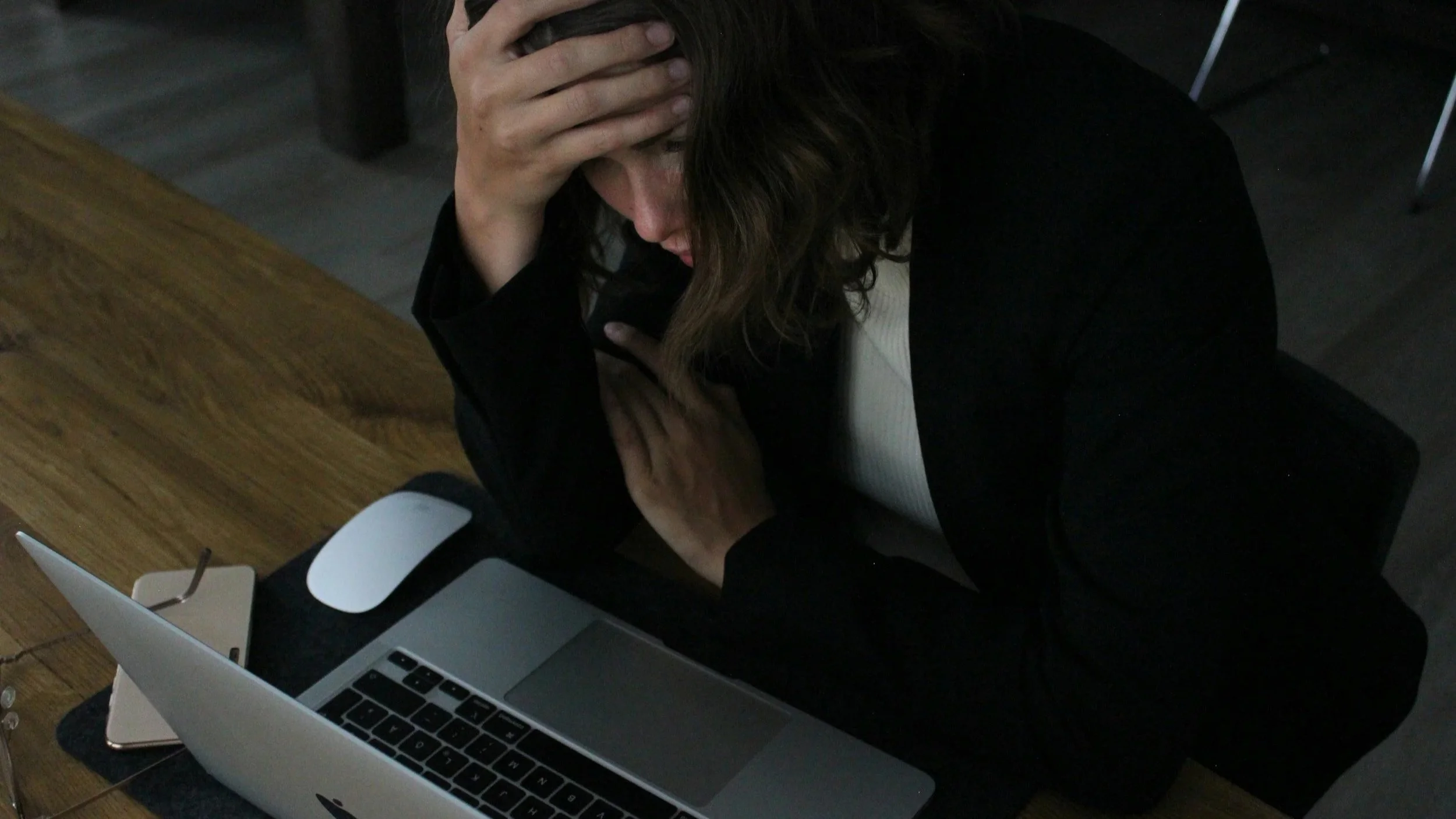
Why Symptom Checking Never Feels Like Enough
One of the most important things to understand about cyberchondria is that reassurance doesn't last.
Many people assume that if they can just find the right answer online, they'll finally feel calm. Unfortunately, anxiety doesn't work that way.
Symptom checking is often like trying to fill a bucket with a hole in it. No matter how much information you gather, the relief eventually leaks away, prompting another search, another article, or another question.
The more you check, the stronger the urge to keep checking becomes.
How to Stop the Cycle of Cyberchondria
1. Gradually Reduce Symptom Checking
While the ultimate goal is to reduce compulsive checking behaviors, stopping completely overnight is often unrealistic.
Instead, try setting limits. Use a timer and gradually decrease the amount of time spent researching symptoms each day. Small, consistent changes are often more sustainable than attempting to quit all at once.
2. Focus on Facts, Not Fear
If you feel compelled to research a health concern, consider looking at reputable statistics related to your demographic and risk factors rather than focusing solely on symptom descriptions.
Many people discover that their actual risk of developing a feared condition is significantly lower than their anxiety suggests.
3. Practice Acceptance Rather Than Certainty-Seeking
One of the most powerful approaches for health anxiety comes from Acceptance and Commitment Therapy (ACT).
At its core, ACT teaches us that uncertainty is an unavoidable part of life. No amount of worrying can guarantee perfect health or eliminate every possible risk.
As difficult as it may be, accepting uncertainty often creates far more peace than endlessly trying to eliminate it.
A helpful reminder is:
"Worrying does not change the outcome."
When we stop trying to control every possible health scenario, we can begin investing more energy into living fully in the present.
4. Redirect Attention Toward What Matters
Health anxiety can consume enormous amounts of mental energy. Consider asking yourself:
What would I be doing right now if I weren't researching symptoms?
Who would I be spending time with?
What goals, hobbies, or values deserve my attention?
Redirecting energy toward meaningful activities helps weaken the grip of anxiety over time.
When Should You Seek Professional Help for Cyberchondria?
It's normal to occasionally worry about your health. However, it may be time to seek support if:
You spend an hour or more each day researching symptoms.
You feel unable to stop checking despite wanting to.
You frequently seek reassurance from doctors but still feel unsatisfied.
You pursue multiple medical opinions because no answer feels reassuring enough.
Health worries interfere with sleep.
Anxiety makes it difficult to focus at work or stay present in conversations.
Symptom checking has become a daily ritual.
If these patterns sound familiar, you don't have to navigate them alone.
Moving Forward
Cyberchondria thrives on uncertainty, fear, and the illusion that more information will bring lasting relief. In reality, excessive symptom checking often increases anxiety and pulls us further away from the lives we want to live.
Learning to tolerate uncertainty, reduce checking behaviors, and trust yourself can help you break free from the cycle of health anxiety.
At Heartship Psychological Services, we help individuals develop practical tools to manage anxiety, build resilience, and reconnect with what matters most. If health anxiety or cyberchondria is impacting your daily life, professional support can make a meaningful difference.


WE’RE HEARTSHIP; WE PROVIDE EVIDENCE-BASED THERAPY TO CLIENTS IN CALIFORNIA.
We work with people of all ages who are navigating anxiety, burnout, life transitions, and emotional overwhelm—helping you build resilience, clarity, and a deeper sense of well-being. Are you seeking support?